Strategy games need depth, clarity, and polish at once. Few internal teams have spare capacity in every area when a deadline, a DLC slate, or a new platform arrives. Game development outsourcing fills those gaps with experts while the creative vision stays in-house.
This guide shows what to hand over and how to choose a partner, along with some good examples of outsourced strategy games, by N-iX Games studio.
Why strategy games need specialized support
Strategy games stack systems on top of systems. Combat, trade, diplomacy, and politics all feed each other, so a balance change in one place ripples through the rest. Each system also needs art, interface, and code that players can read at a glance, and DLC and patches ask for that capacity again.
Researchers call the genre a hard problem. A 2024 IEEE Access review of StarCraft II points to many agents acting together, hidden information, and rewards that arrive late. A 2025 systematic review in Applied Intelligence looks at how deep reinforcement learning is used in real-time strategy games. Human players carry a similar load, since they run an economy, armies, and diplomacy while often seeing only part of the map.
Design choices steer play too. A 2024 study of Civilization VI and Humankind found four mechanics that use the game world to steer choices. They are spatial constraints, movement modifiers, uncommon events, and dynamic indexes. Each one needs art, interface, and code that agree. A change in one place spreads.
An AAAI paper listed 43 strategies from Sun Tzu’s The Art of War. It argued that designers should give players the actions needed to carry them out. In a shipped game those actions live in the interface, so a missing filter or alert closes off a strategic option.
Game development outsourcing is already common for this work. After 181 studios in 54 countries were asked about the creation of their games, 59% of those stated that they had worked with an outsourcing company. Among them, 61% had handed art production to a partner on their latest projects.
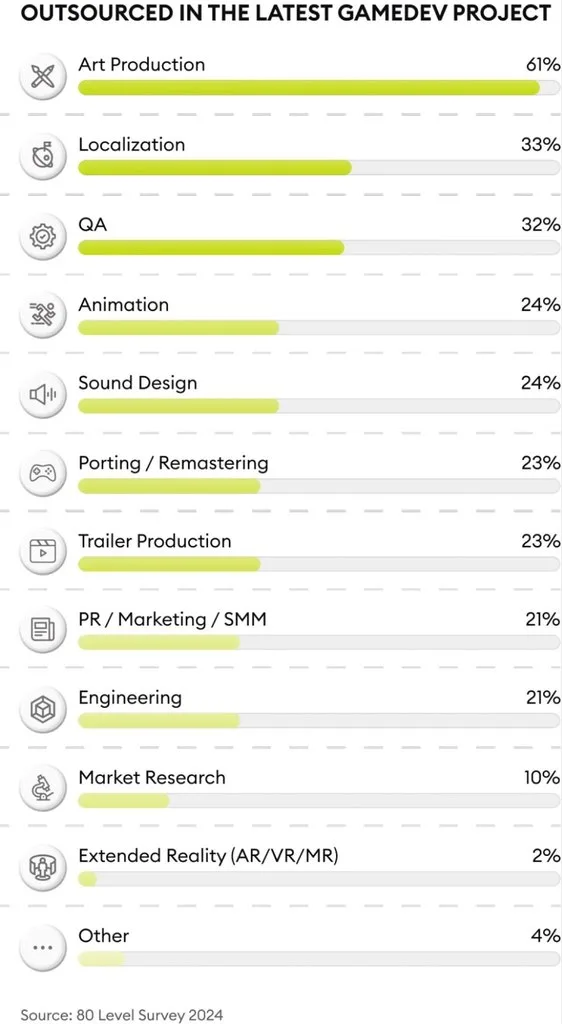
Source: 80lv
What to outsource in strategy game development
Game development outsourcing works best on work with clear specs and review gates, so art, UI/UX, and engineering support are the usual starting points.
The same 80 Level report found that most respondents were not ready to give game design and game development to an agency, so creative direction and system design typically stay with the core team.
Note: You do not need a finished design bible to begin. If scope, style, or technical plans are still in the process of being created, we at N-iX Games help define them together at the start. Each part below shows what a partner can take on.
1. Art production, from historical assets to sci-fi fleets
Game art outsourcing is the easiest scope to define. A typical brief lists:
- Concept art and visual development;
- 2D icons, illustrations, portraits, and faction assets;
- 3D units, buildings, vehicles, and environments;
- Animation, LODs, and technical art;
- DLC and seasonal content.
Your team usually keeps the art bible and final approval, since strategy art must read at map scale and stay consistent across large libraries. If the style guide is still taking shape, our art leads can help build it from your references.
2. UI/UX design
Strategy game UI/UX is a craft of its own. Interfaces must lay out maps, unit panels, tech trees, and alerts without burying the player. A team with strong systems design can still lack experts in how to present information, and outside UI/UX designers can fill that gap. Your designers remain the voice on how much players see, and when.
If those ideas are not documented yet, we can help turn them into flows and wireframes.
3. Engineering and multiplayer development
Engineering support covers gameplay code, tools, speed tuning, and live-ops features. Multiplayer strategy often needs custom netcode and servers that scale, and RTS game development also depends on code that runs fast under load. Your team usually owns the tech plan and the roadmap, and the partner builds to them.
If the architecture is still open, a technical director can help shape it with you first.
4. Full-cycle development for new IPs and mobile strategy games
Full-cycle game development suits teams that need help from prototype to launch, such as a new IP, a new genre, or a mobile strategy title. It is also the rarest request in game development outsourcing.
Our business development team reports that clients far more often order single services, such as a set of developers, UI/UX, or a batch of 3D art.
How to choose a game outsourcing partner for strategy games
We advise picking a game development outsourcing partner for genre skill and clear communication first, because a wrong pick can be quite costly.
In 80 Level research, 47% of studios that had used outsourcers were not fully happy. Of those, 57% blamed low-quality work and 30% blamed communication. A lot of studios also ask friends and colleagues for tips before they contact a provider, so reference calls carry weight.
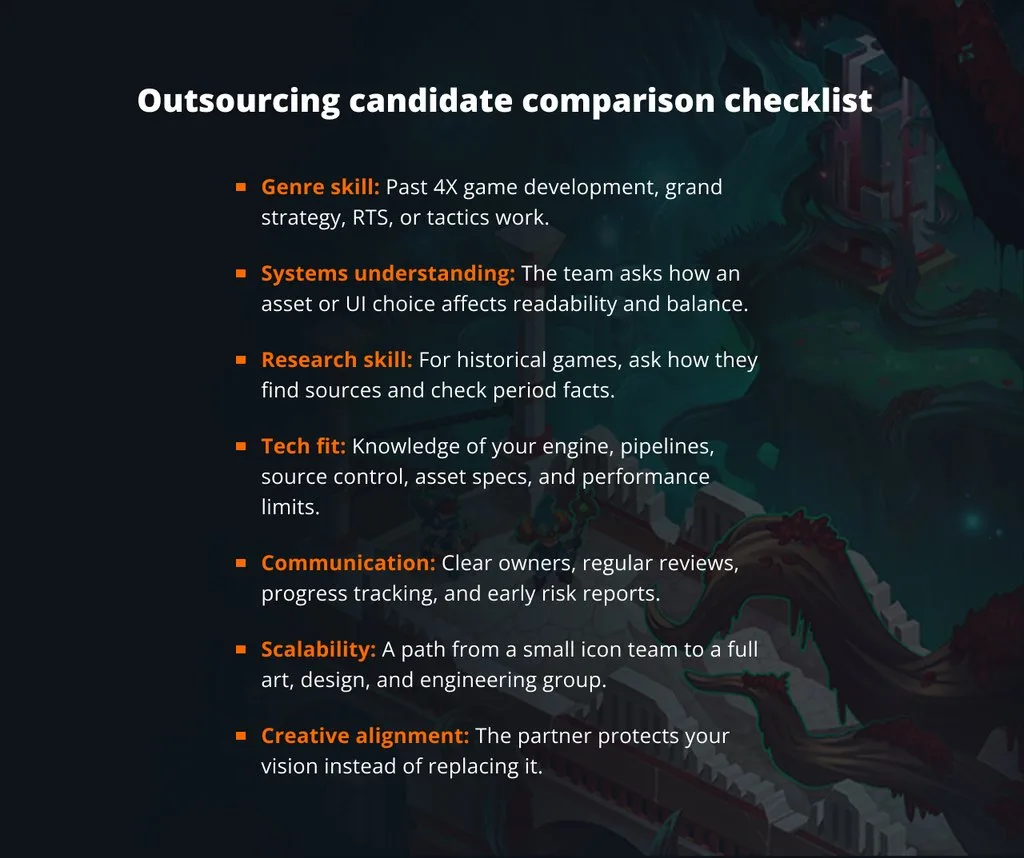
Use this quick checklist to compare candidates:
Strategy game outsourcing in practice: N-iX Games projects examples
This vast portfolio of projects shows how game development outsourcing can cover any scope, both one icon set and the full-cycle delivery.
Europa Universalis V
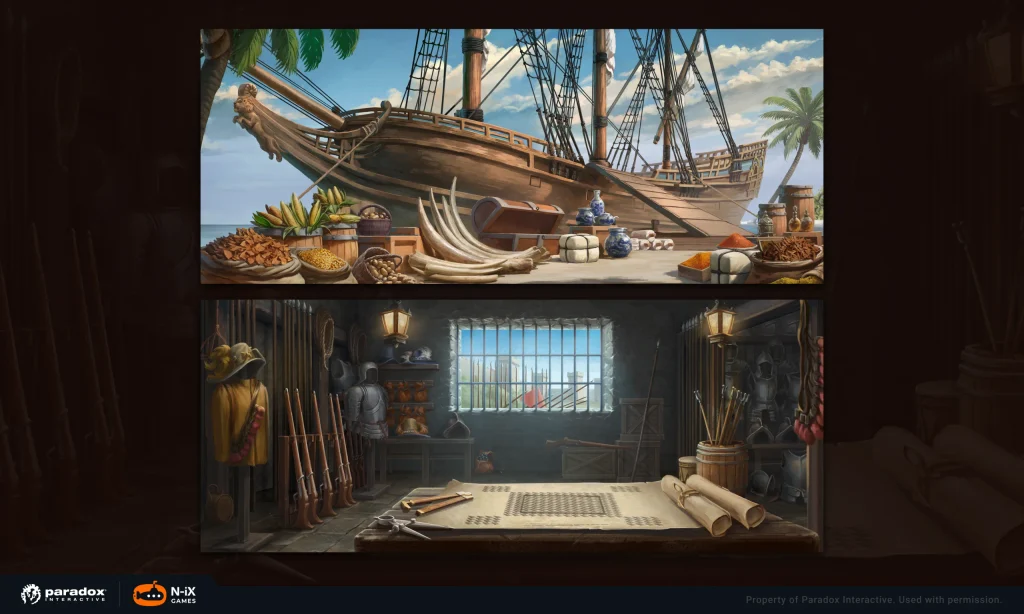
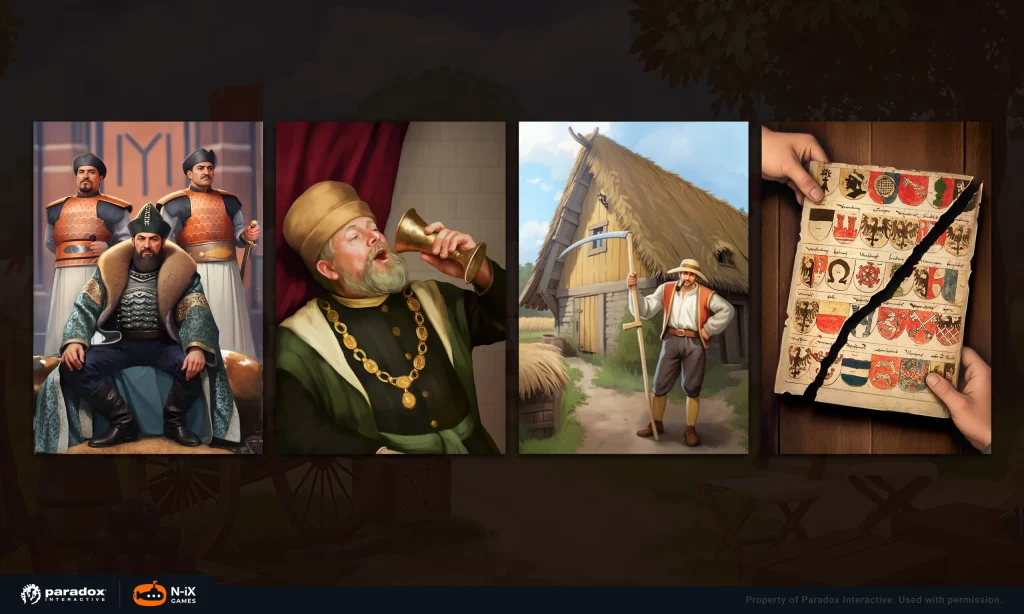
Service delivered: 2D art production, illustrations / concept art, 3D art production, animations.
Europa Universalis V is Paradox’s grand strategy sequel, where players guide a nation from the late Middle Ages to the dawn of the modern era.
A group of N-iX Games specialists joined the extended production team, from 2D and 3D artists and animators to art leads, producers, and game designers. Together they made over 1,500 icons, a dozen-plus illustrations, concept art, and nearly 100 animated 3D assets.
Victoria 3
Service delivered: 3D art production.
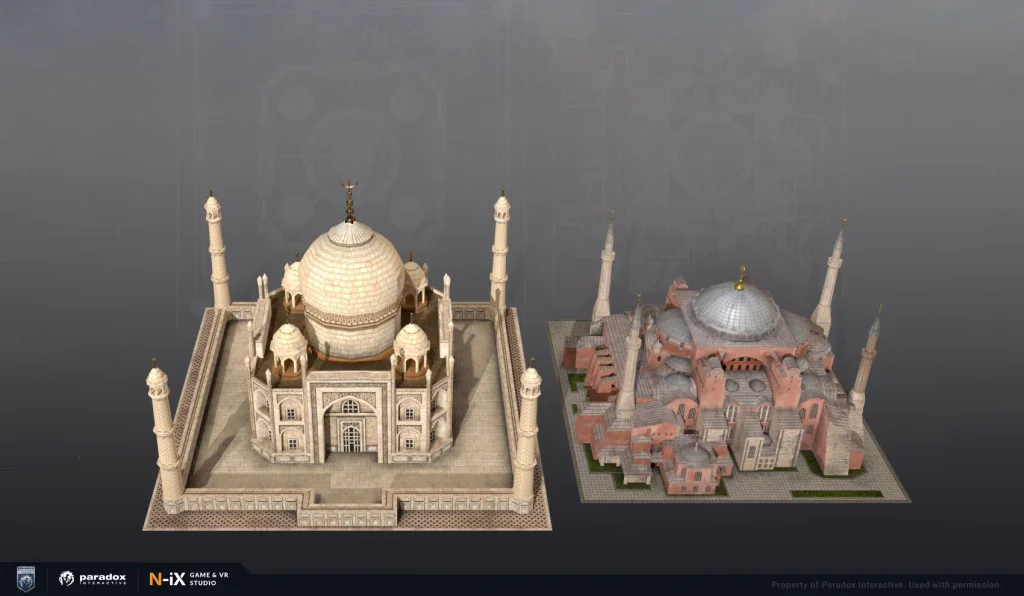
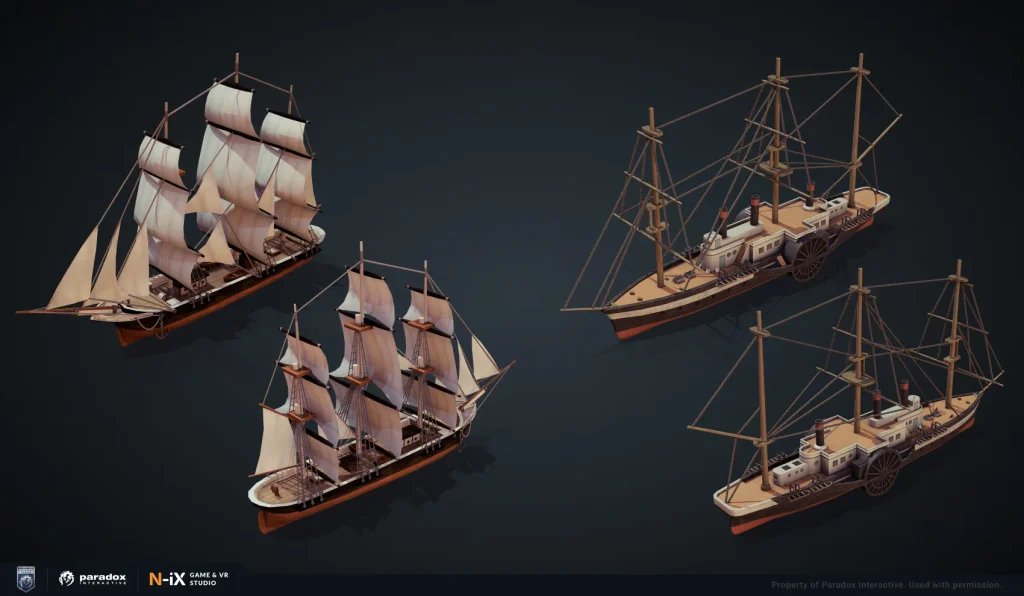
Victoria 3 is a Paradox grand strategy game. It simulates a hundred years from 1836, and players guide any nation they choose.
Our art team built 3D assets for the world map, such as the Hagia Sophia, the zeppelin, and a Wild West town center. Each landmark had to match its condition in that period. Every asset also got several LODs, which protects map performance when players zoom out.
Hearts of Iron IV
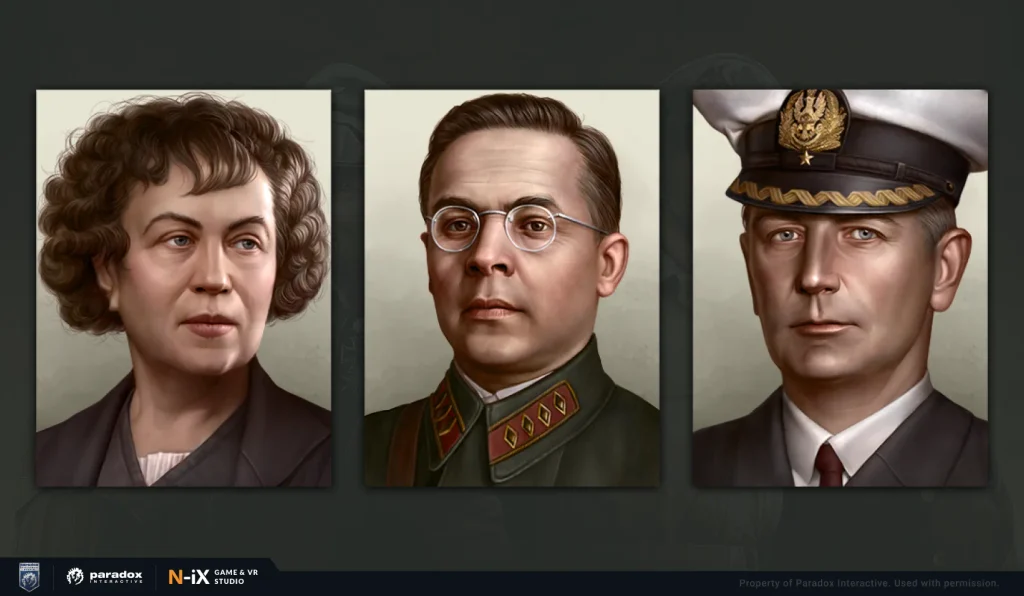
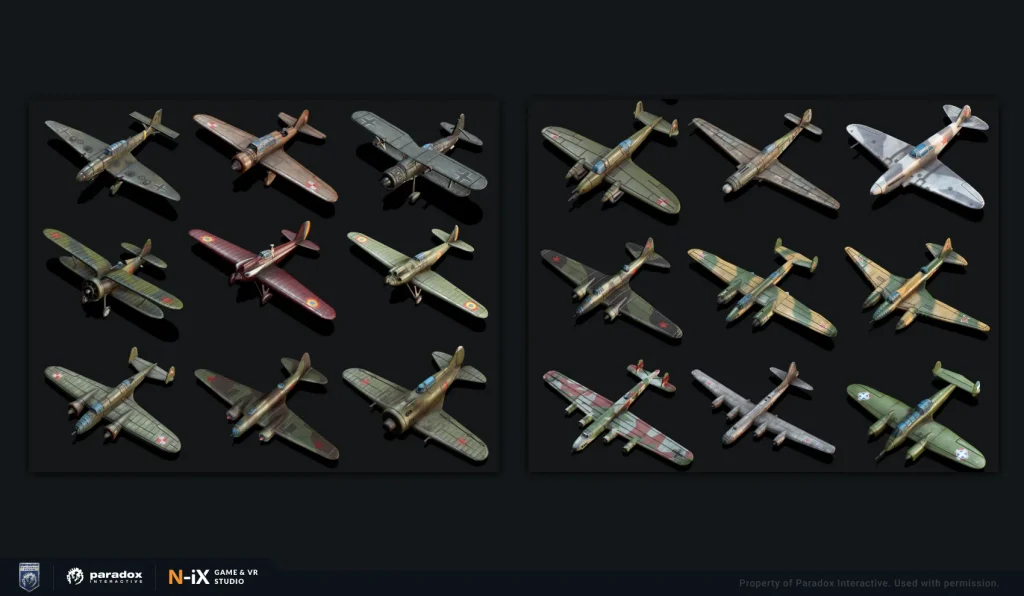
Service delivered: 2D art production, illustrations / historical portraits, 3D art production.
Hearts of Iron IV is a Paradox grand strategy game about the buildup to World War II and the war itself, covering 1932 to 1948.
For the 2020 La Résistance expansion, we delivered 20+ period-accurate war machines, each with several camouflage types. Our team also created 82 leader portraits, 22 historical and 60 generic, in the game’s set style, all on a tight timeline.
Crusader Kings III
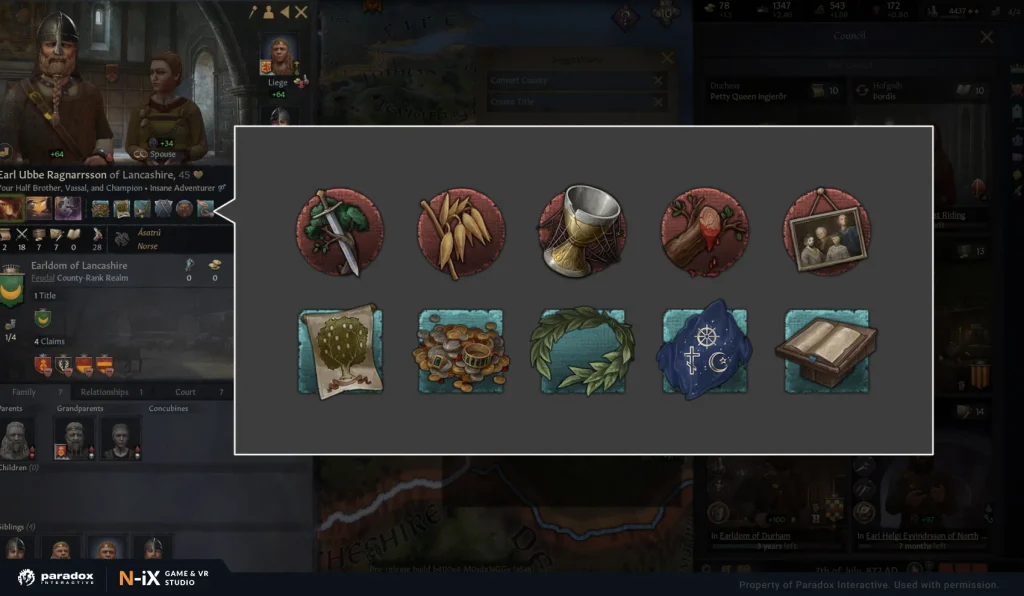
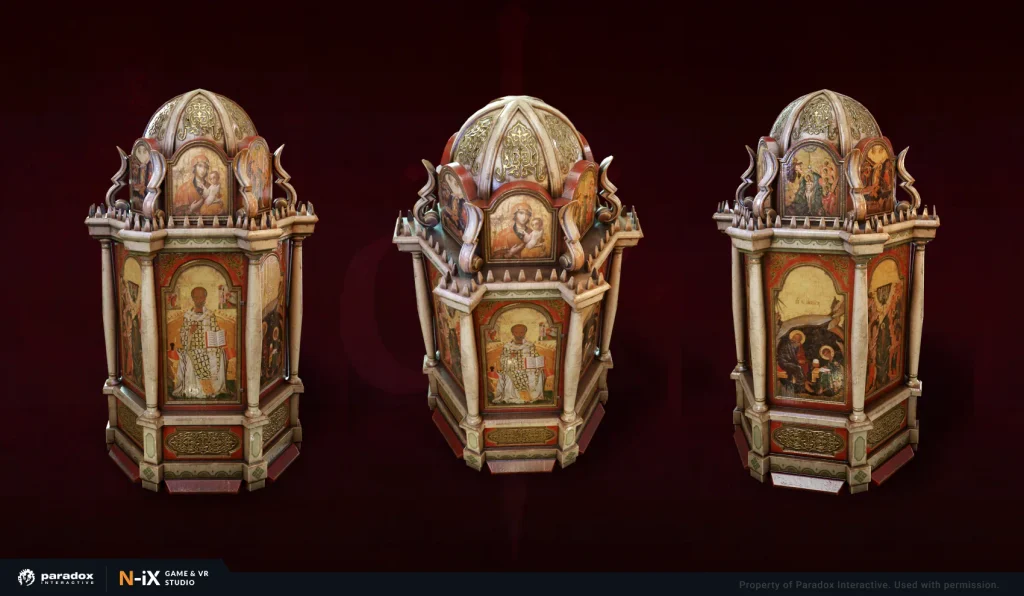
Service delivered: 2D art production, UI/UX, 3D art production.
Crusader Kings III puts players in charge of a medieval dynasty, where character traits shape how everyone behaves.
The work split in two. Artists hunted for old references, then rebuilt medieval court artifacts in 3D and judged how much grime and damage an object 800 years old or more should show.
Meanwhile, the 2D team drew trait icons where everything had to exist in the 12th century, and because those icons also appear scaled down in other menus, readability shaped each design.
Stellaris
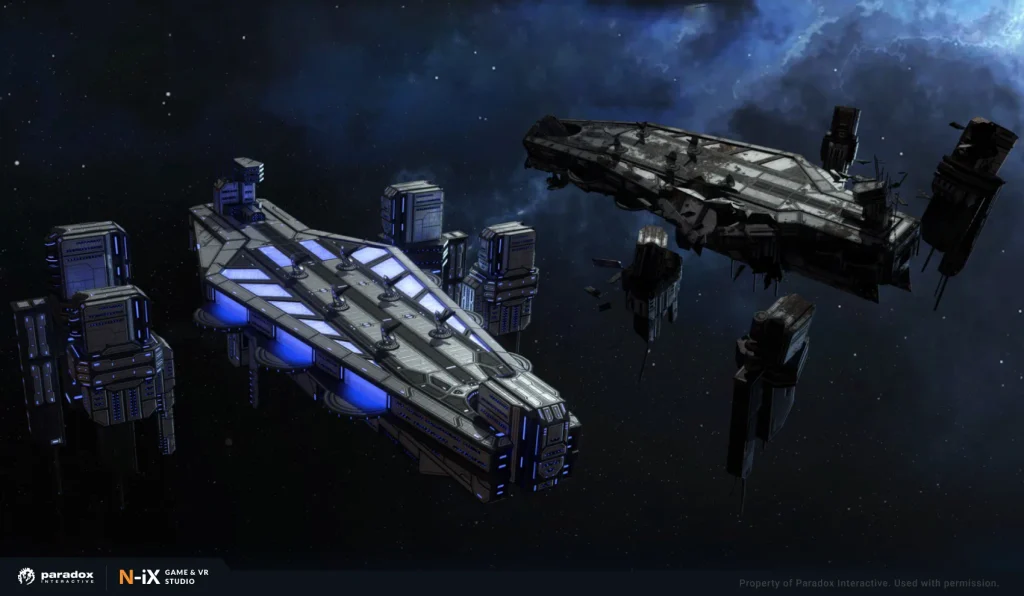
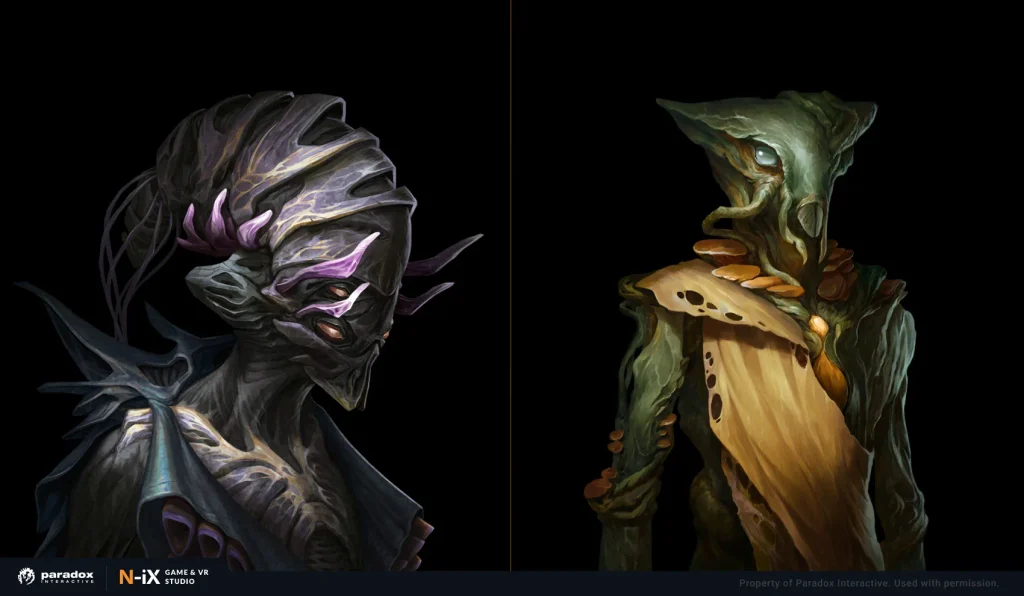
Service delivered: 2D art production, illustrations, concept art, 3D art production.
Stellaris, published by Paradox in 2016, lets players explore many galaxies and races, build an empire, and wage diplomacy and space war.
We produced concept art and 3D spaceships for its DLC: 16 ships for the Humanoids Species Pack and 7 for Apocalypse. Work started with the game’s art style and races. Artists then developed shape language and silhouettes, the client approved each concept, and production followed with blockout, high- and low-poly models, UV unwrapping, and texturing.
Imperator: Rome
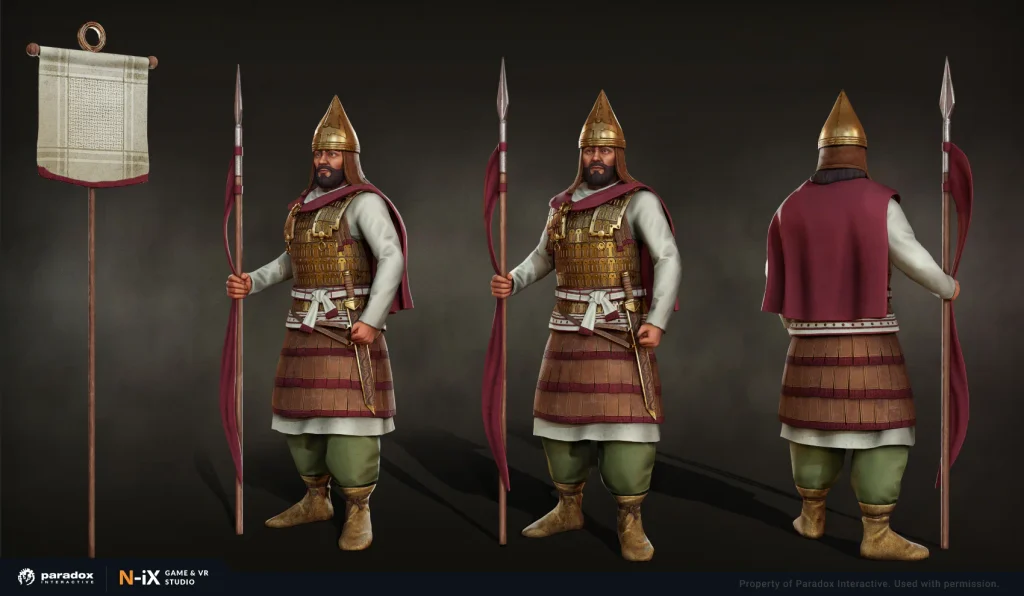
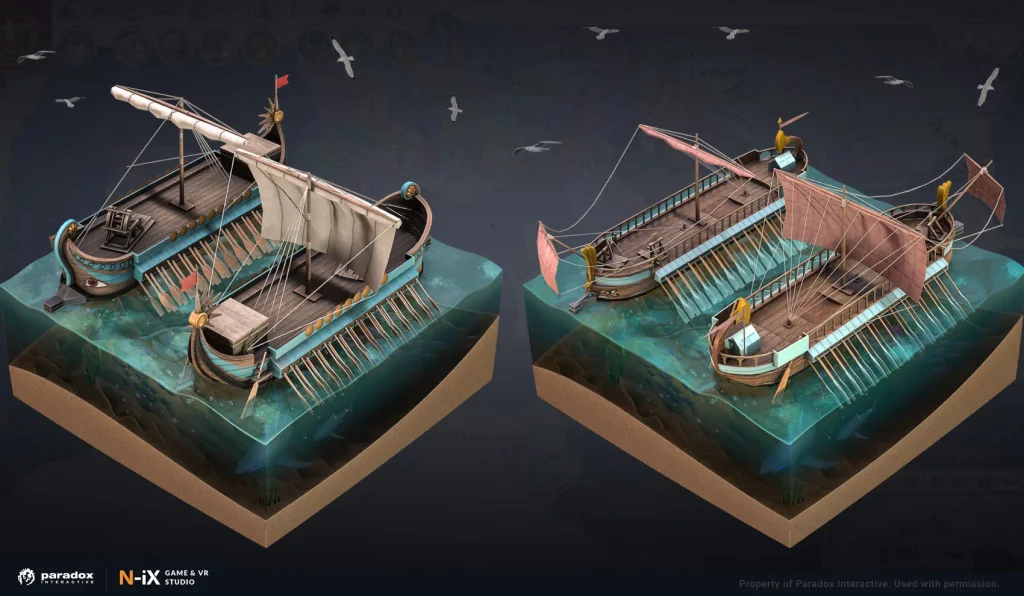
Service delivered: 2D art production, illustrations, UI/UX, 3D art production.
Imperator: Rome, released in 2019, returns players to the start of the Imperial Era to turn a nation into an empire by sword and diplomacy.
Our artists imitated murals on marble, with low contrast and a limited palette. That style made stories of rebellious generals and ambitious politicians feel more real.
On the 3D side, we modeled ships for each culture and ancient cities, all based on historical research and delivered on a tight schedule.
Desynced
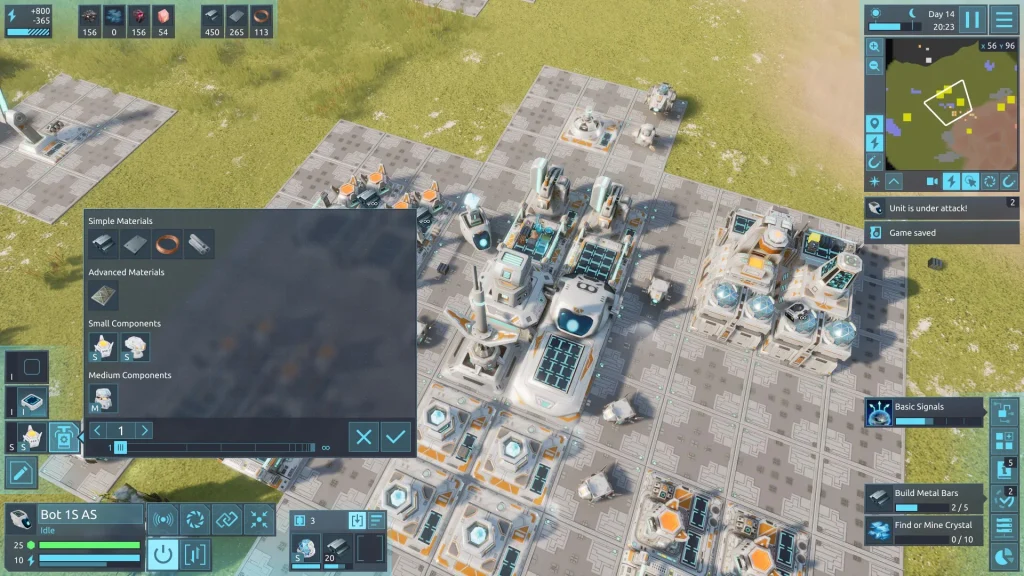
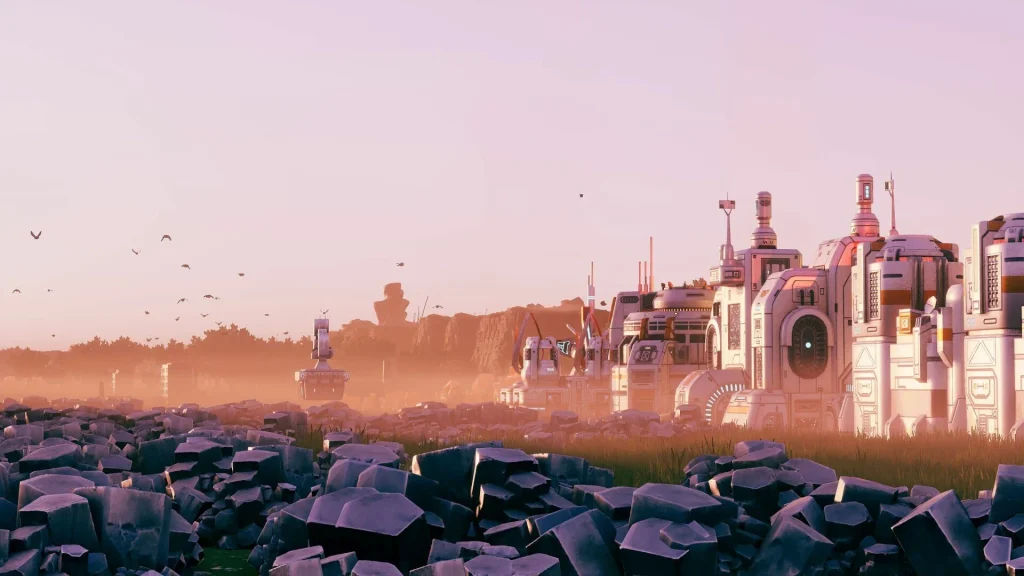
Service delivered: UI/UX design, art production.
Desynced is a sci-fi survival strategy game from Stage Games where players explore procedural worlds, build bases, and program custom units through a Component Swapping system.
We designed the logic and visual style of its interface, from the full HUD and unit displays to a two-level tech tree, premade building templates, tutorials, and a player journal. The standout piece is the unit-programming interface. It is a node-graph-inspired editor where players connect components by drag and drop, which keeps that depth readable.
Chess Arena
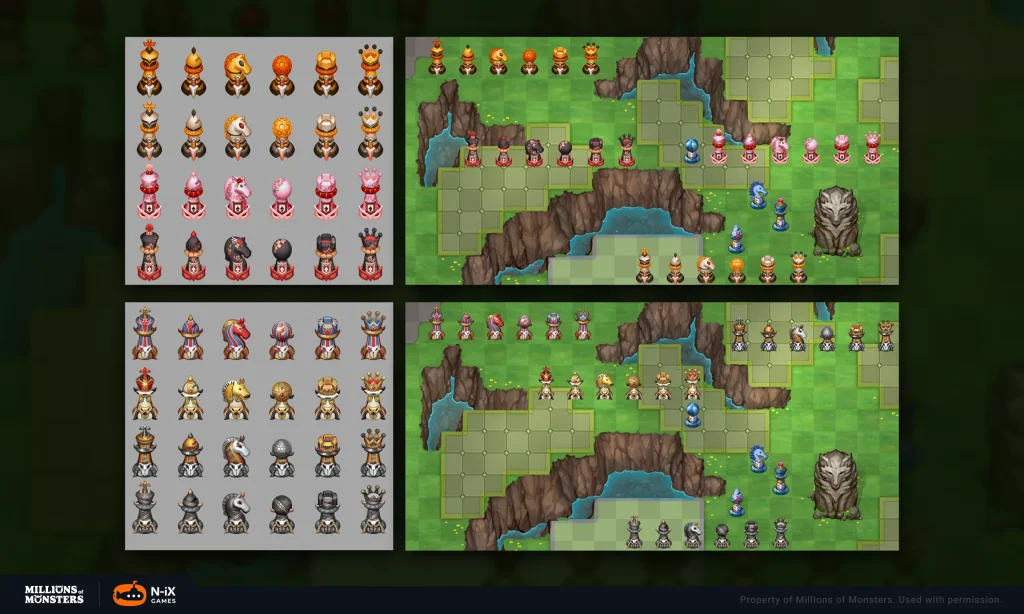
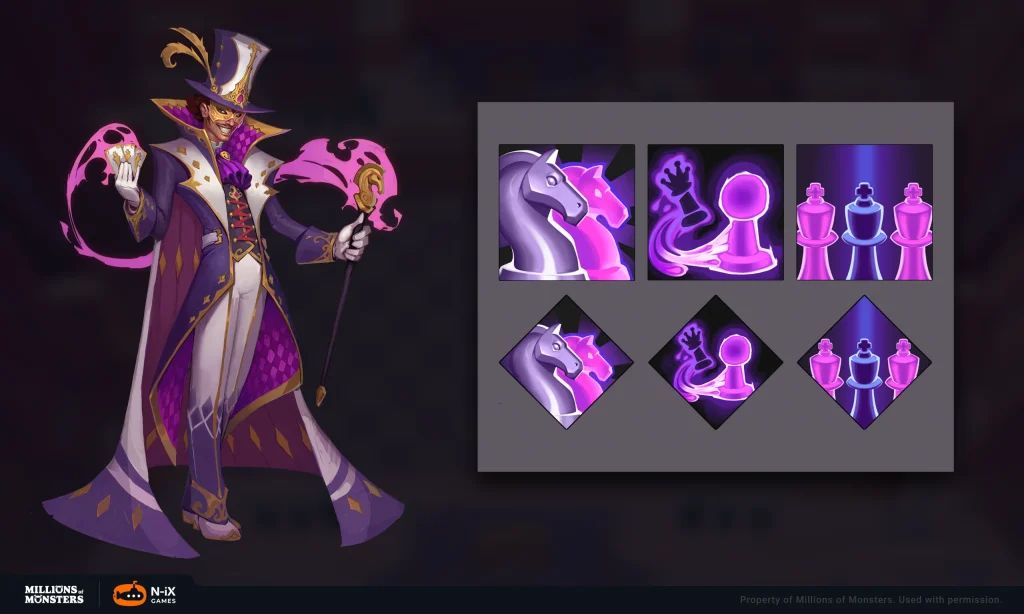
Service delivered: Art production, UI design, co-development.
Chess Arena rebuilds chess in real time. Its main mode is a 40-player battle royale where pieces run on cooldowns and the board keeps shrinking.
We joined Millions of Monsters for three years as a game co-development partner. Playtesting pushed the art from a casual look toward a more adult tone, so we reworked scale and detail to match.
On the code side, our Unity developers, engineers, and QA testers built nearly everything except the backend. That included gameplay systems, custom multiplayer, a launcher, designer tools, and an ECS-like framework.
Jungle Paintball
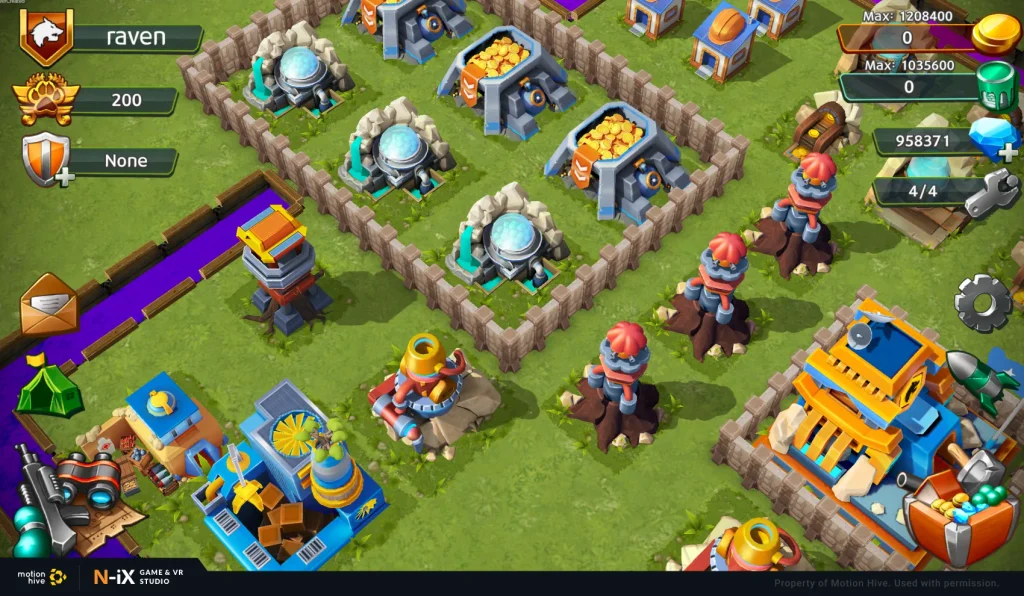
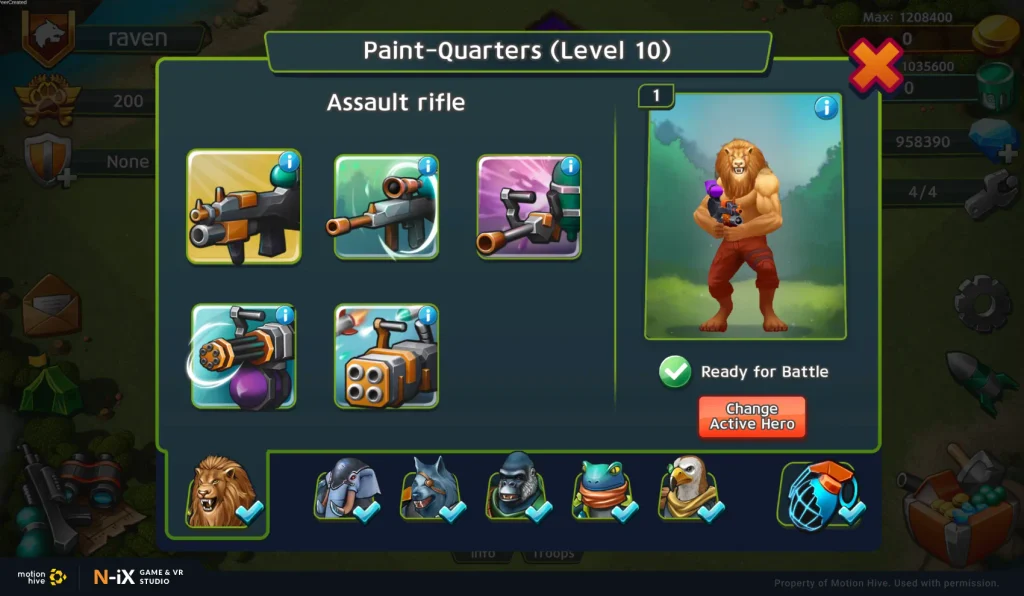
Service delivered: Full-cycle game development.
Jungle Paintball is a 2016 mobile real-time strategy game. Players command a base, fight for territory, and play 2v2 multiplayer or a single-player campaign.
For the Motion Hive, we designed the game with them, tested many art styles before settling on one, and built a clan system, voice chat, and a match-replay recorder. We also optimized code, network, and assets for a wide range of devices.
A practical outsourcing workflow for strategy games
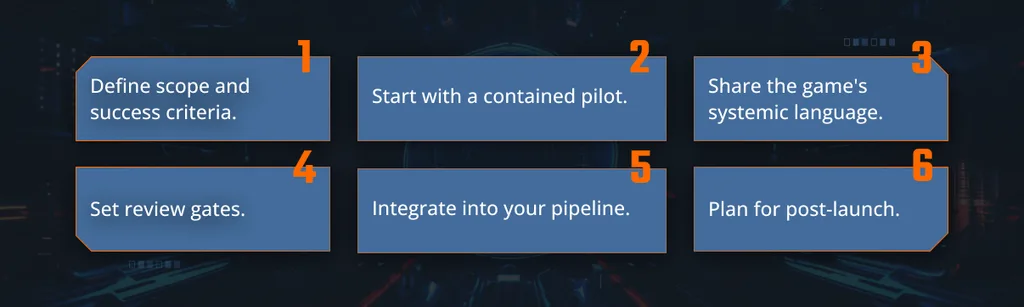
These six steps turn the project lessons into a repeatable game development outsourcing process. For contract models, pricing, and IP, see our step-by-step guide to game development outsourcing.
- Define scope and success criteria. Decide whether you need art help, UI/UX experts, engineers, or a full-cycle team.
- Start with a contained pilot. Test art direction, tools, and review speed on a small asset batch or one UI flow.
- Share the game’s systemic language. Hand over design docs, faction bibles, references, UI patterns, tech limits, and balance rules.
- Set review gates. Approve research, concept, blockout, final asset, and integration before you scale.
- Integrate into your pipeline. Use shared boards, source control, naming rules, and named owners.
- Plan for post-launch. Keep room for DLC, patches, seasonal events, and balance updates.
Situations that call for game development outsourcing
Outsourcing earns its place in a few clear situations:
- Your team has strong creative direction but lacks art, UI, or engineering bandwidth.
- You need to speed up DLC, seasonal content, or a vertical slice.
- The project calls for historical research, sci-fi concepting, or complex UI design.
- You are building a mobile strategy game and need full-cycle support.
- You want to test a new genre or platform without adding permanent headcount.
Build fantastic strategy games without overloading your team
Strategy games feel awesome when their depth feels planned and clear. Game development outsourcing with the right studio helps a team build that depth more reliably.
Several projects above began with shared references and written guides, and that groundwork is cheap to copy. So pick one small task, run it as a pilot, and judge the partner on the result.
If you are planning a strategy game and want a partner who understands its depth, reach out to N-iX Games and tell us what you are building!